THE PINK ONION OF MENTON
March 6, 2026
It is essential to preserve and promote ancient and/or wild plant varieties.
Since the 2000s, experts have been warning that nearly one million species are threatened, particularly plants, which are disappearing twice as fast as animals. Climate change and the loss of animals that disperse seeds are reducing the adaptability of plants, while the decline of pollinators and birds is exacerbating the situation.
Unfortunately, much of the region's rich gastronomic heritage is on the verge of extinction. Mauro Colagreco has brought an ethnobotanist onto his R&D team to work with local communities and micro-producers to identify these ancient plants before they disappear. The ethnobotanist's role is to study the relationship between humans and plants and to rediscover rare endemic varieties on the French Riviera.
The Mirazur Sanctuaries protect forgotten plants such as cousteline, an ancient salad green, and sorbier, whose pink fruits were used in early fermented beverages, rediscovered near abandoned fields.
For years, Mauro Colagreco has been working with local associations such as the Maison des Semences Paysannes Maralpines. These volunteers search for, collect, and exchange seeds while training and bringing together farmers. Thanks to them, rare varieties such as the pink onion of Menton have been preserved.
The history of the Menton pink onion
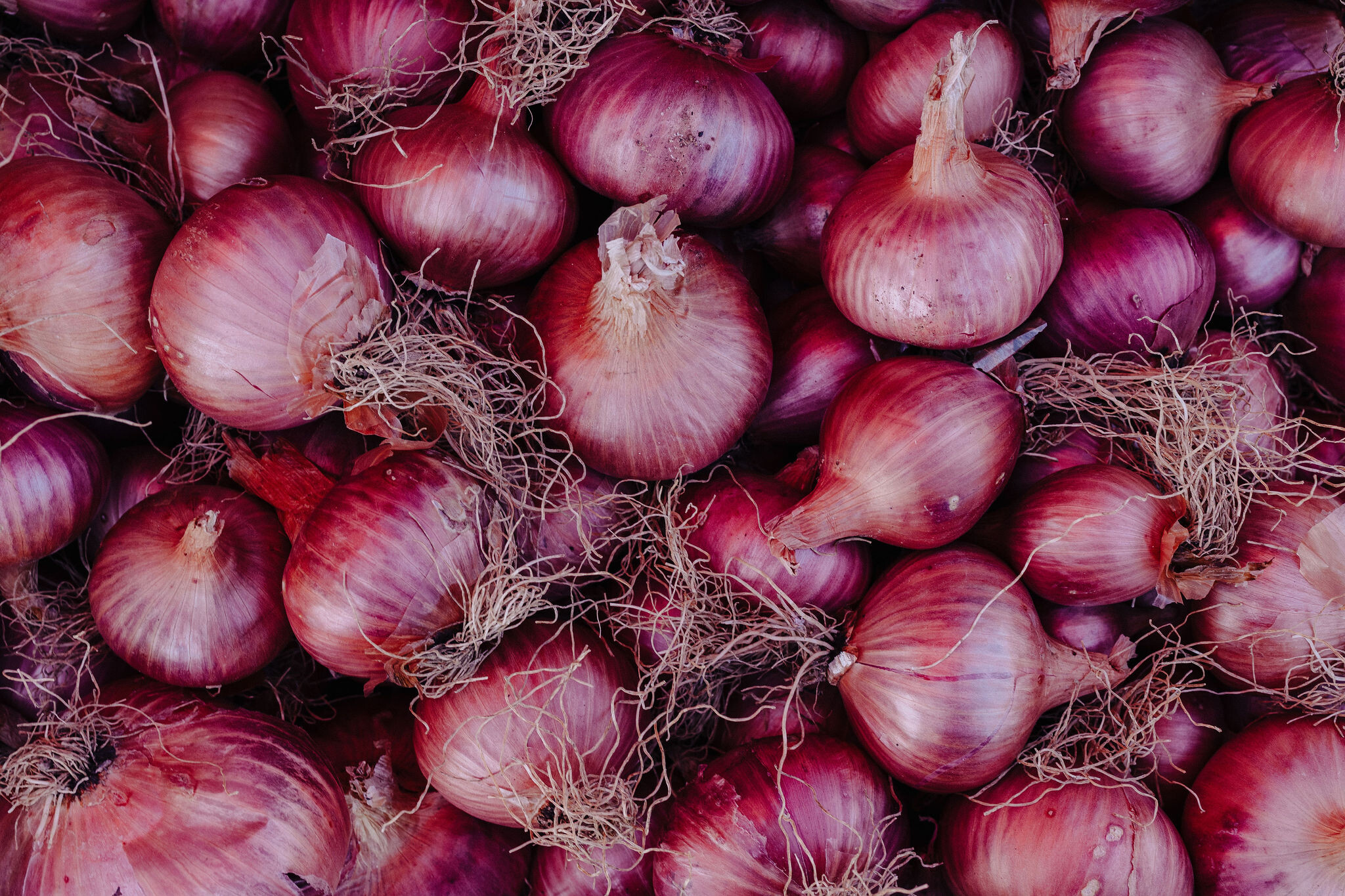
In 2021, 84-year-old Nicole is the last person to grow the local variety of Menton pink onions, inherited from her grandfather who used to sell them at the market, bringing them from the hinterland on the back of a mule.
This ruby-pink onion, which is very large and has thick skin, is difficult to grow because it requires specific expertise in hybridization and seeds. Its complete cycle lasts 22 months, one of the longest among vegetables, and its germination is very slow (2 years). These characteristics make it a variety that is particularly vulnerable to food standardization and the loss of cultivated biodiversity.
The first plans of the MIRAZUR*** Sanctuaries were used to replicate the plants, since onions must not be eaten in order to produce a flower. In the second year (2022), seeing the good results of the various harvests, the network created a pink onion festival, similar to the lemon festival.
In 2023, the gardens of the three-star restaurant produced 250 kg of these onions, which reach full maturity in July but can only be eaten fresh.